États : Les Orphelines
March 23 – April 22, 2006
B-312 (Artists Center), 372, Ste-Catherine West, Espace 403, Montreal (Quebec) H3B 1A2, Canada
Group Exhibition including Luce Meunier, Daniel Langevin, Sylvain Breton.
The B-312 Gallery is pleased to present States, an exhibition bringing together One of a Kind by Luce Meunier, The Comforts by Daniel Langevin, and Orphans by Sylvain Breton. Beyond being pictorial, the three proposals share a common concern: making the motif the sensitive focal point of the works. How can one still subscribe to the motif of the trace, to form, to the icon, without being assimilated into the many returns to figuration that followed the turn toward abstraction? Are states of painting, states of the painting, states in painting possible on the margins of modernist interpretation, without necessarily falling into the postmodern question? It would seem so. Luce Meunier presents square paintings in which the colored matter appears to have been subjected to something other than a gesture.
The works seem to bear witness to a strictly pictorial event that the artist achieved by controlling only the conditions of its possibility. Drawing in this way within the material leads the viewer to pay particular attention to the plasticity of acrylic beyond its function as a binder, so that the motif is no longer located only within the limits of the picture plane, but just as much within the thickness of the paint deposit. Painting, bas-relief, casting, and transfer processes overlap without excluding one another.
Daniel Langevin, for his part, offers paintings that result from a desire to subtract from the image its slightest details, its texture, its motif, its possible references to the outside world. There is no question here of figuration or abstraction, but rather of what might possibly link them. It is the whole question of the limits of legibility - of space, motif, scale, trace-making - that guides the painter s work. Flat areas of pure color and plays of simple forms ironically stage the hyper-presence of information that characterizes today s world.
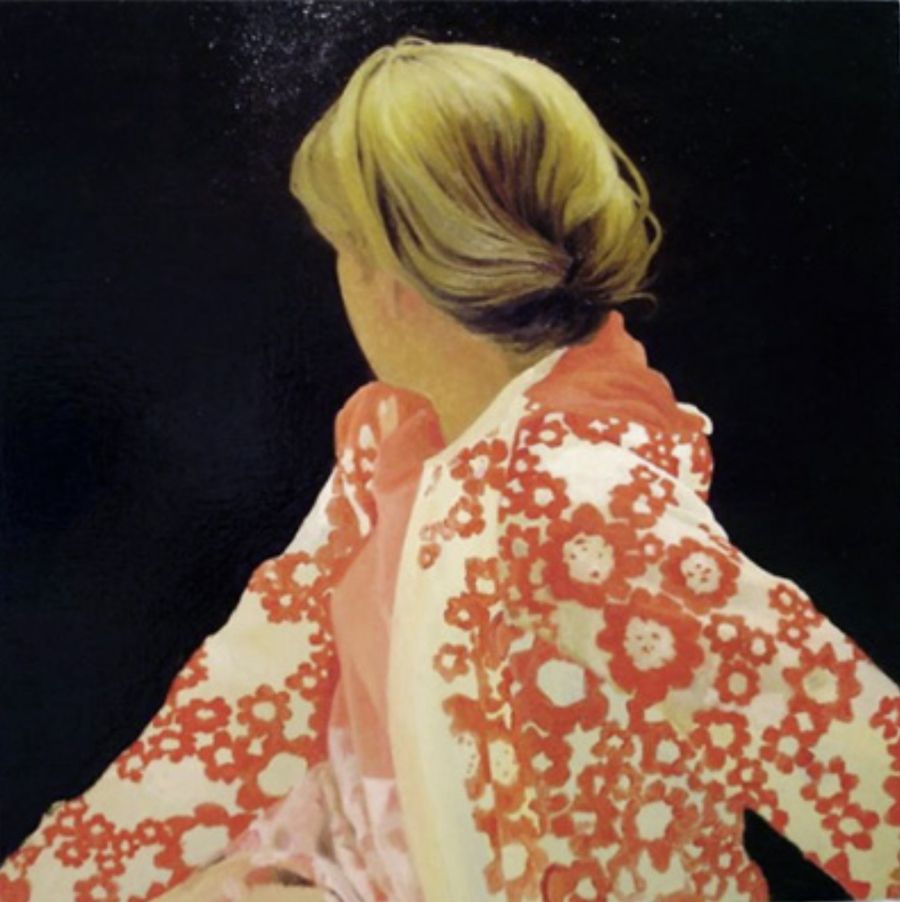
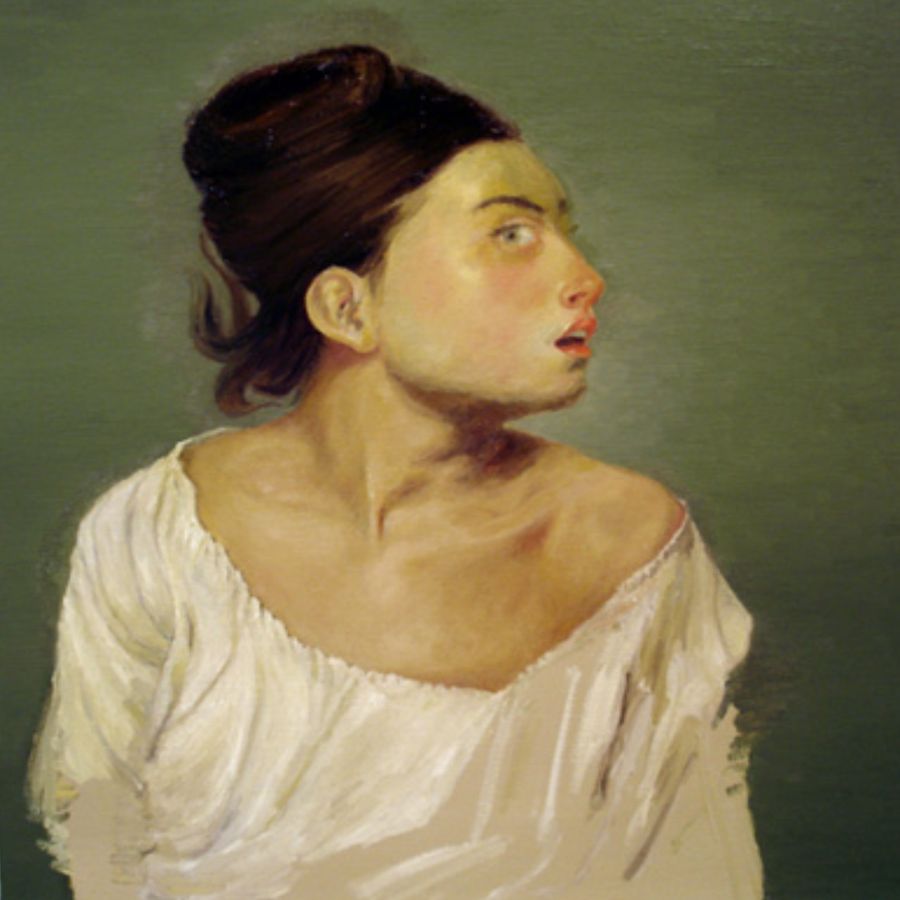
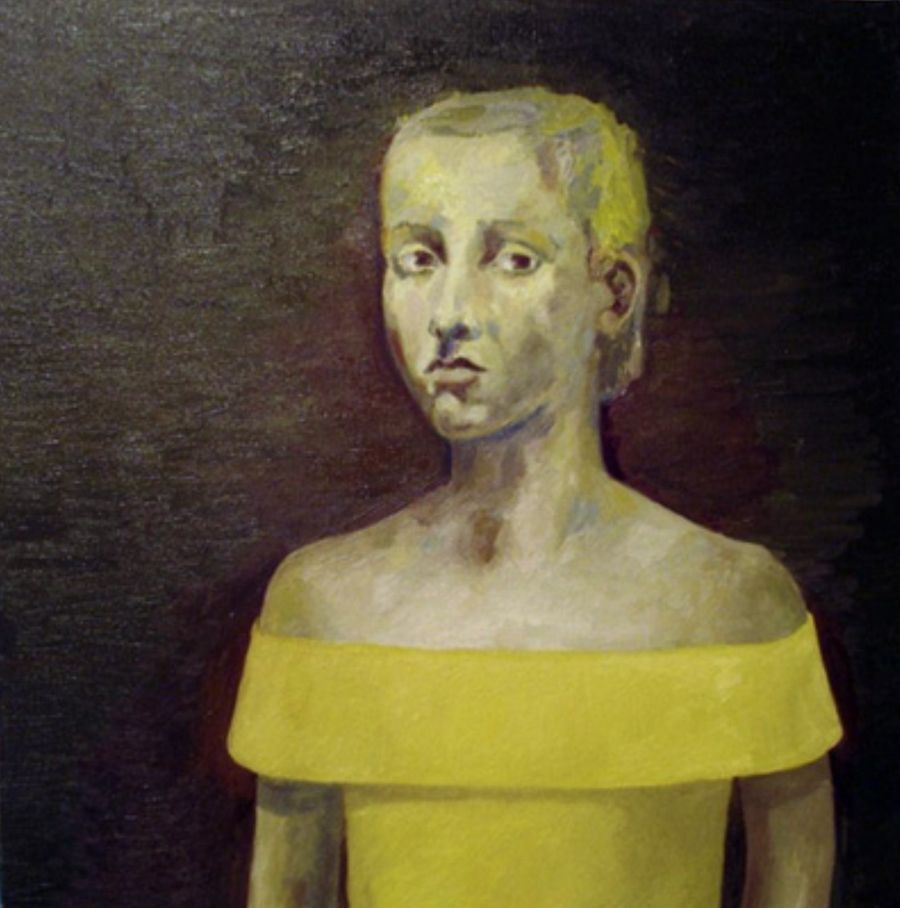
From one portrait to the next, Sylvain Breton summons faces that are both famous and anonymous. Famous because they are drawn from paintings that punctuate the phallogocentric history of painting - Delacroix, Manet, Van Gogh, Richter - anonymous because they are the faces of women without names - an orphan, Therese, Betty. Each painting is a faithful copy of the painted face. And yet a movement of the chin, the quality of a gaze, an indefinable effect of presence assert themselves each time as a conquest of the human being over the icon that held them prisoner. To paint and to renew not a motif, but an encounter from person to person, in the order of performance.
Jean-Emile Verdier and Emilie Renaud-Roy
Les Orphelines
Les Orphelines from De personne à personne Series (From Nobody to Nobody Series).
One fundamental principle of contemporary art is originality, and the relationship between the original and originality lies at the heart of these reprises. Some works summon a déjà-vu from the eighteenth century, while others operate as agencies of possibility and impossibility, confronting the modern condition of artistic representation. In continuity with the conceptual project, the paintings in the series Les Orphelines, through the inherited tradition of oil painting and its logic of play, call upon the recurrent visuality of a permanent continuum past-perspective of the present. Yet the object still reveals a performativity of its own.
In Betty, the figure turns away from the viewer, refusing the direct encounter traditionally promised by portraiture. The floral surface, at once intimate and ornamental, becomes a screen through which memory, reproduction, and distance are held together. Rather than revealing a subject, the painting stages the impossibility of possession: the image remains present, yet withheld.
Within Les Orphelines, Betty becomes an orphaned image of looking itself, suspended between familial intimacy, painterly repetition, and the modern condition of representation.
Les Orphelines
Les Orphelines from De personne à personne Series (From Nobody to Nobody Series).
One fundamental principle of contemporary art is originality, and the relationship between the original and originality lies at the heart of these reprises. Some works summon a déjà-vu from the eighteenth century, while others operate as agencies of possibility and impossibility, confronting the modern condition of artistic representation. In continuity with the conceptual project, the paintings in the series Les Orphelines, through the inherited tradition of oil painting and its logic of play, call upon the recurrent visuality of a permanent continuum past-perspective of the present. Yet the object still reveals a performativity of its own.
In L'Orpheline, the figure appears caught between grief and apprehension, her gaze directed toward an event that remains outside the image. The painting inherits the Romantic charge of Delacroix's orphan, yet repositions it within a contemporary structure of repetition, incompletion, and return.
The looseness of the painted surface keeps the figure in a state of becoming, as if the image were still searching for the conditions of its own appearance. Within Les Orphelines, L'Orpheline is not only a reprise of loss; it is the persistence of historical emotion after its original world has disappeared.
Les Orphelines
Les Orphelines from De personne à personne Series (From Nobody to Nobody Series).
One fundamental principle of contemporary art is originality, and the relationship between the original and originality lies at the heart of these reprises. Some works summon a déjà-vu from the eighteenth century, while others operate as agencies of possibility and impossibility, confronting the modern condition of artistic representation. In continuity with the conceptual project, the paintings in the series Les Orphelines, through the inherited tradition of oil painting and its logic of play, call upon the recurrent visuality of a permanent continuum past-perspective of the present. Yet the object still reveals a performativity of its own.
In Thérèse, the figure faces the viewer with a fragile and unsettling directness. The yellow form across the body interrupts the portrait, acting less as clothing than as a formal barrier between image, subject, and gaze.
Through this restraint, the painting distances itself from the voyeuristic tensions attached to Balthus and turns the reprise toward the ethics of representation. Within Les Orphelines, Thérèse becomes an image of confrontation: not the repetition of an inherited figure, but the exposure of the gaze that continues to produce her.