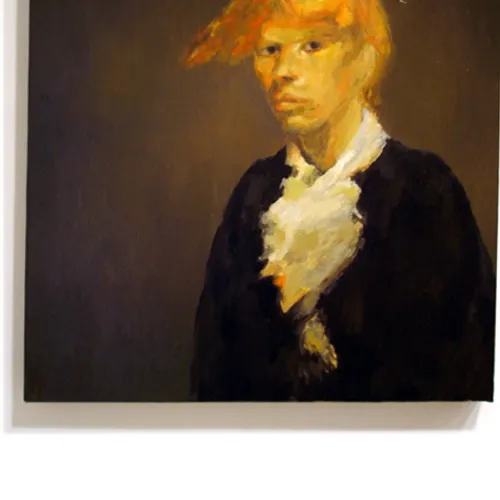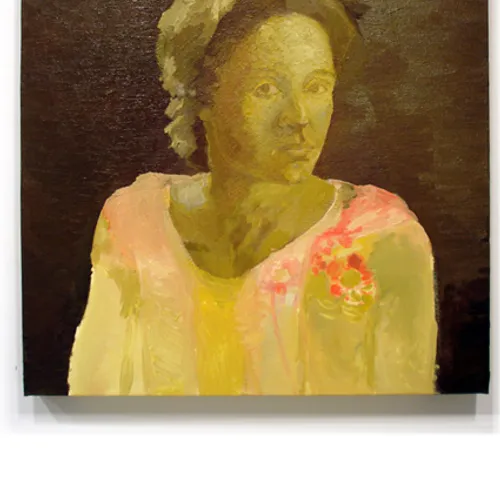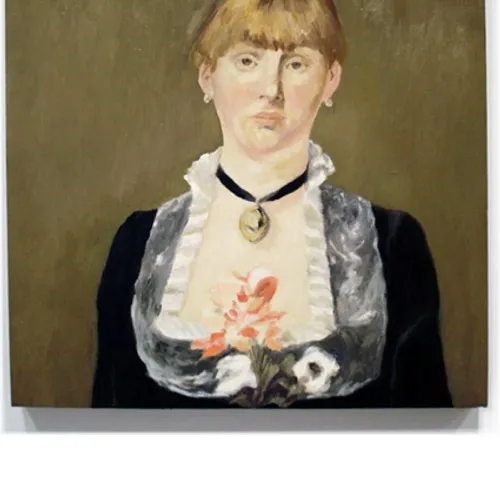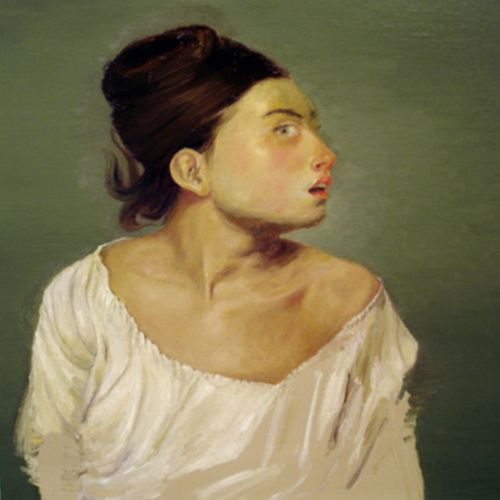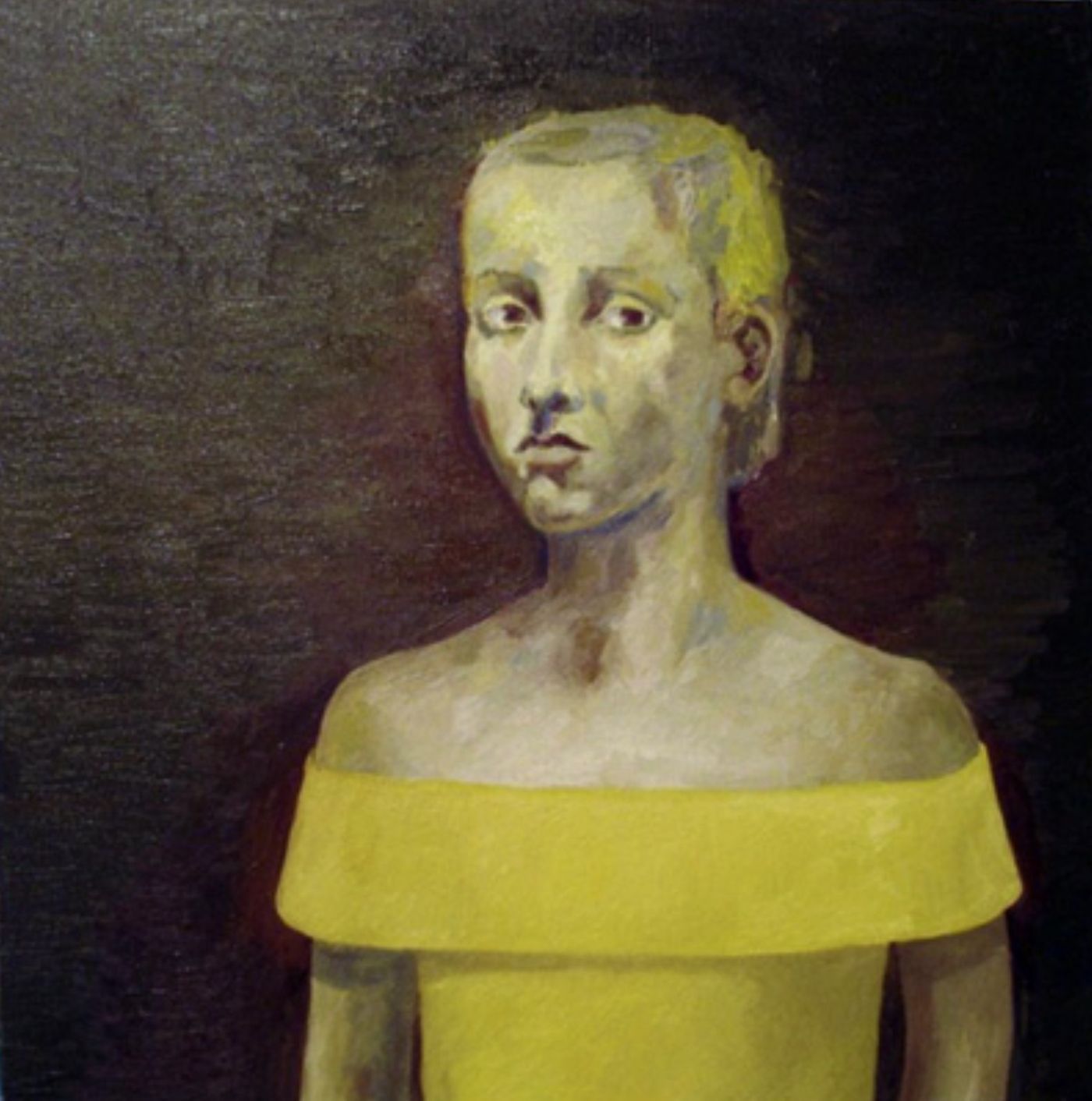
One fundamental principle of contemporary art is originality, and the relationship between the original and originality lies at the heart of these reprises. Some works summon a déjà-vu from the eighteenth century, while others operate as agencies of possibility and impossibility, confronting the modern condition of artistic representation. In continuity with the conceptual project, the paintings in the series Les Orphelines, through the inherited tradition of oil painting and its logic of play, call upon the recurrent visuality of a permanent continuum past-perspective of the present. Yet the object still reveals a performativity of its own.
In Thérèse, the figure faces the viewer with a fragile and unsettling directness. The yellow form across the body interrupts the portrait, acting less as clothing than as a formal barrier between image, subject, and gaze.
Through this restraint, the painting distances itself from the voyeuristic tensions attached to Balthus and turns the reprise toward the ethics of representation. Within Les Orphelines, Thérèse becomes an image of confrontation: not the repetition of an inherited figure, but the exposure of the gaze that continues to produce her.