From Ribas: "The only thing self-evident about the contemporary is that nothing concerning the contemporary is self-evident anymore."
From Adorno: "It is self-evident that nothing concerning art is self-evident anymore, not its inner life, not its relationship to the world, not even its right to exist."
Essay · Reproduction & Authorship
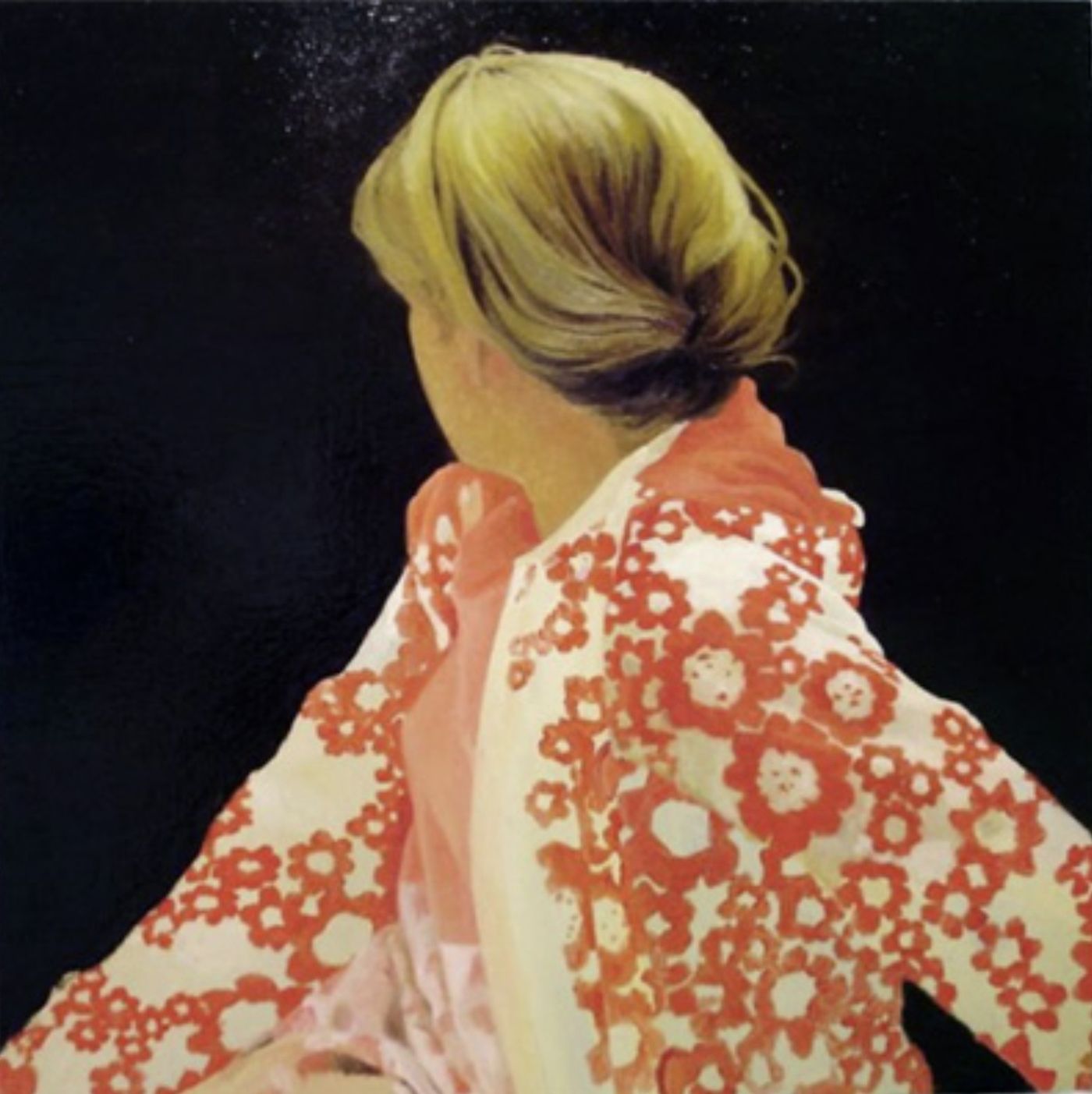
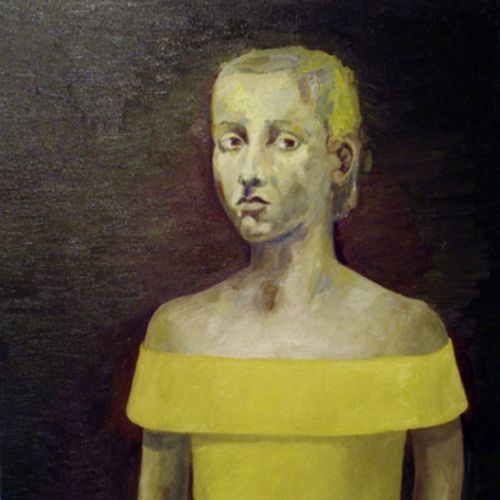
Betty
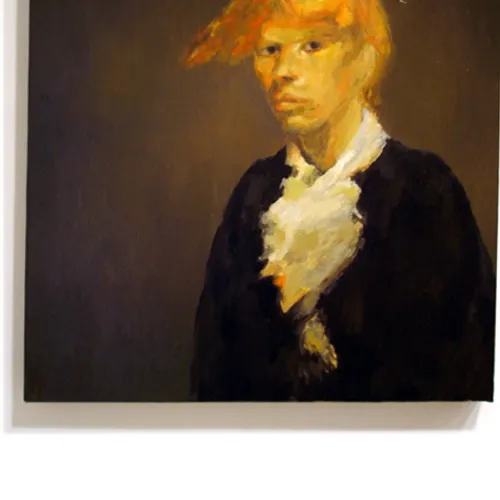
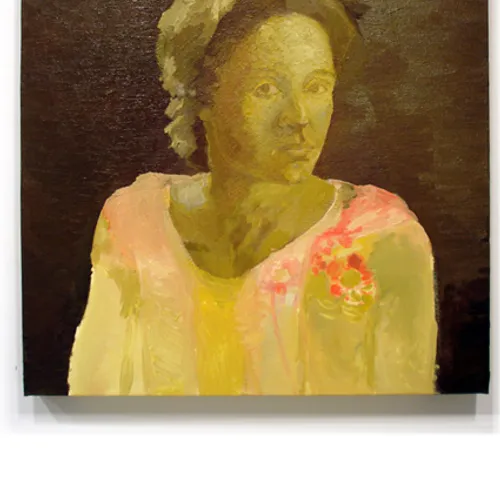
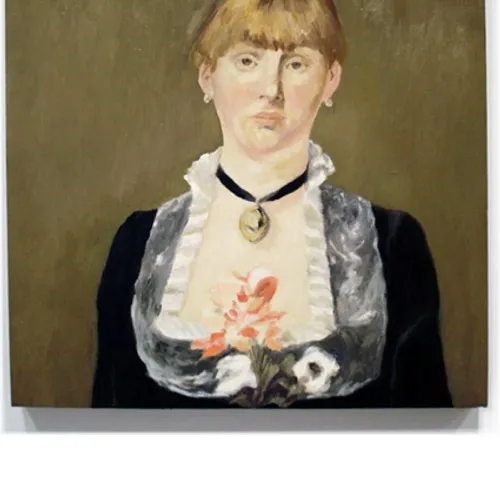
Les Orphelines from De personne à personne Series (From Nobody to Nobody Series).
One fundamental principle of contemporary art is originality, and the relationship between the original and originality lies at the heart of these reprises. Some works summon a déjà-vu from the eighteenth century, while others operate as agencies of possibility and impossibility, confronting the modern condition of artistic representation. In continuity with the conceptual project, the paintings in the series Les Orphelines, through the inherited tradition of oil painting and its logic of play, call upon the recurrent visuality of a permanent continuum past-perspective of the present. Yet the object still reveals a performativity of its own.
In Betty, the figure turns away from the viewer, refusing the direct encounter traditionally promised by portraiture. The floral surface, at once intimate and ornamental, becomes a screen through which memory, reproduction, and distance are held together. Rather than revealing a subject, the painting stages the impossibility of possession: the image remains present, yet withheld.
Within Les Orphelines, Betty becomes an orphaned image of looking itself, suspended between familial intimacy, painterly repetition, and the modern condition of representation.
Replication as Method
Mechanical repetition does not erase authorship; it relocates it. The copy is not a mistake but a lens — a way to see how institutions decide what counts as original.
Appropriation in this archive is not plagiarism dressed as provocation. It is a disciplined rehearsal: same contours, different pressure, so the viewer must name what changed.
When Attitudes Become Form
Szeemann's curatorial wager still holds: exhibitions are arguments in space. Here, layout proportions and typographic scale carry part of that argument before any single image loads.
The gateway you passed through is part of the work — access, membership, and repetition of familiar flows are materials, not neutral plumbing.
The Original in Postmodern Systems
Postmodern art systems trade in signatures, editions, and provenance. To repeat a form is to test whether meaning travels with the object or with the network that certifies it.
If the original is a position rather than a timestamp, then every return to the same image is a new negotiation — not nostalgia, but inventory.