Essay · Reproduction & Authorship
The Thin Red Line
Metropology: Love as a life statement commodity, City Intelligence by Money, Playa del Carmen, Mexico.
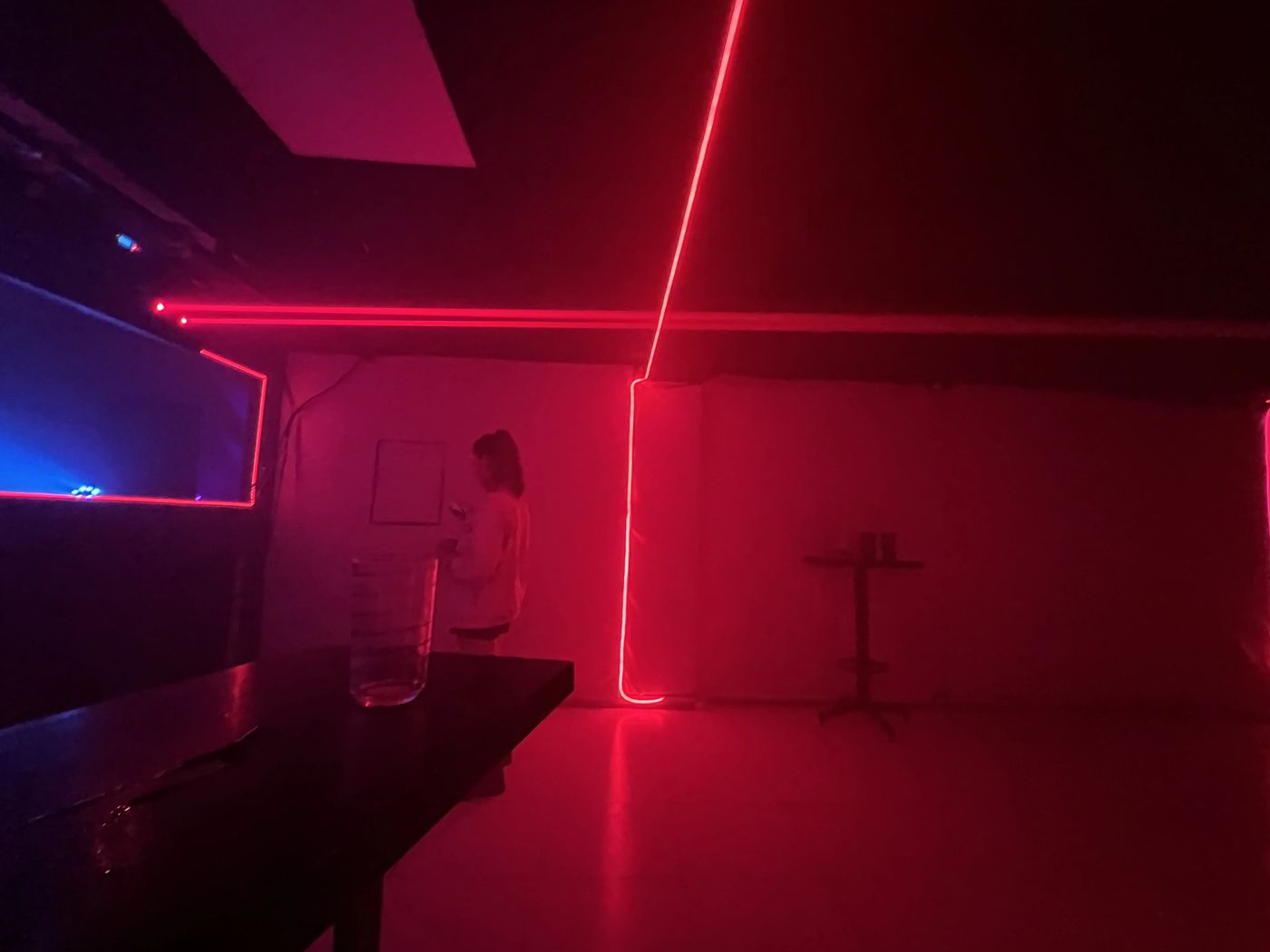
The Thin Red Line is a photographic work from Playa del Carmen, where the image becomes a threshold between landscape, desire, and symbolic interruption. The red line operates as a minimal gesture, but also as a limit: a mark that separates, connects, warns, and organizes the field of vision.
In relation to Metropology, the work places the idea of love as a life statement commodity within the visual economy of travel and leisure. The image does not simply document a place; it exposes the way place itself becomes coded through longing, consumption, and projection.
The Thin Red Line functions as a quiet structure of resistance inside the image. It suggests that every scene of apparent openness contains a boundary, and that every promise of escape is also crossed by systems of value, visibility, and control.
Replication as Method
Mechanical repetition does not erase authorship; it relocates it. The copy is not a mistake but a lens — a way to see how institutions decide what counts as original.
Appropriation in this archive is not plagiarism dressed as provocation. It is a disciplined rehearsal: same contours, different pressure, so the viewer must name what changed.
When Attitudes Become Form
Szeemann's curatorial wager still holds: exhibitions are arguments in space. Here, layout proportions and typographic scale carry part of that argument before any single image loads.
The gateway you passed through is part of the work — access, membership, and repetition of familiar flows are materials, not neutral plumbing.
The Original in Postmodern Systems
Postmodern art systems trade in signatures, editions, and provenance. To repeat a form is to test whether meaning travels with the object or with the network that certifies it.
If the original is a position rather than a timestamp, then every return to the same image is a new negotiation — not nostalgia, but inventory.